
Clark County Sex Offender Checks
The Nevada Public Sex Offender Registry conditions page is the official starting point for Clark County. Accept the posted terms, complete the CAPTCHA, and choose the search path that fits the facts already known. A name search works best when spelling and aliases are available. A geographic search is more useful for an address or Nevada ZIP. Vehicle Search is a separate path, while Community Notifications handles alert enrollment. Exact radius choices sit behind the live CAPTCHA and JavaScript interface, so they should be read from the current screen rather than assumed.
The statewide result is only one layer. Registration is handled by the police department inside an incorporated city that has one, or by LVMPD in the sheriff role elsewhere in Clark County. That local agency is the sound place to report suspected noncompliance. Registry help and corrections go to the Nevada Department of Public Safety, Records, Communications and Compliance Division at 333 West Nye Lane, Suite 100, Carson City, NV 89706, by phone at 775-684-6262, or by email at sorhelp@dps.state.nv.us.
Clark County Registration Offices
Mailing addresses can mislead a Clark County registry user. Las Vegas, Henderson, and North Las Vegas do not share one city registration desk. A person within Henderson reports through Henderson Police at 223 Lead Street, with 702-267-5000 or 702-267-4700 as the documented contacts. North Las Vegas Police handles registration at 2266 Civic Center Drive and 702-633-1715. LVMPD serves Las Vegas and the unincorporated county area, including much of the resort corridor.
Nevada Registry Help
333 W. Nye Lane, Suite 100
Carson City, NV 89706
775-684-6262
sorhelp@dps.state.nv.us
Henderson Police
223 Lead St.
Henderson, NV
702-267-5000
North Las Vegas Police
2266 Civic Center Dr.
North Las Vegas, NV
702-633-1715
This division matters when a Clark County profile seems stale. Direct the compliance report to the office responsible for that location, but send a portal-data correction to Nevada registry staff. Call 911 only for an emergency.
Nevada Sex Offender Registry Searches
Nevada DPS maintains the public registry. Its terms warn that inclusion follows a conviction and the governing statutes, not a fresh finding that a registrant is dangerous. Use the search as an awareness tool. Positive identification requires fingerprints, and a matching name or street alone cannot supply that certainty.
- Open the official conditions page, read the limits, and select I agree.
- Enter the required CAPTCHA code or request the alternate code aid.
- Choose Name, Geographic, ZIP, or Vehicle Search and enter only facts you can check.
- Open the likely profile, compare its public identifiers, and verify key facts with the registering agency.
The official Clark County registry search gateway shows the controls captured below. This image records the gateway rather than a person's result.
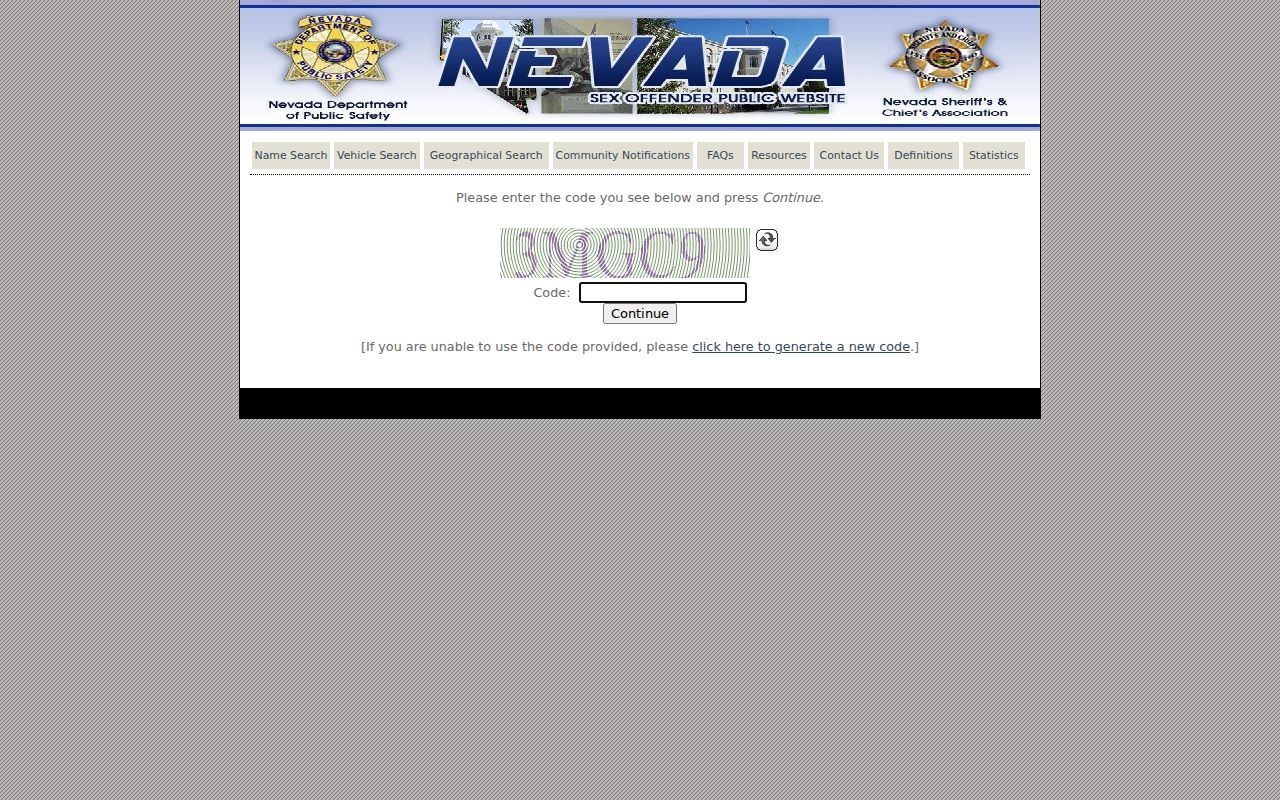
The gateway's CAPTCHA helps protect the system, but it also means saved links may return a reader to the entry screen.
| Control | Type | Required | Notes |
|---|---|---|---|
| I agree | Button | Yes | Accept the registry conditions |
| CAPTCHA Code | Text | Yes | Alternate or new-code aid is offered |
| Name or alias | Text | By name mode | Use known spelling and aliases |
| ZIP or address | Text | By place mode | Supports Nevada geographic searching |
| Vehicle Search | Tab | No | Separate vehicle pathway |
| Community Notifications | Tab | No | Alert enrollment pathway |
Clark County Tier I Visibility
A blank Clark County result does not prove that no registration record exists. Nevada does not display Tier I offenders whose victims were adults on the public site. The state also withholds every victim's name. Those limits protect information the public statute does not authorize for display, while the full registration file remains available to the agencies that administer the program.
The practical lesson is narrow. Search more than one name form, check the geographic path, and avoid turning a missing public hit into a conclusion about a person's past. The official registry is not a full criminal history. Court files may document the conviction that led to registration, and the local registration office can address a current compliance concern. For the broader court trail, the Clark County court case lookup explains which court system holds the filed case.
Registry Profiles: What They Show
NRS 179B.250 defines the public profile. It may show a current photograph, legal name and aliases, physical description, year of birth, residence, work or school location, vehicle details, the qualifying offense, and its conviction information. Tier and reported compliance status can also appear. The public side does not expose a victim's name, a full date of birth, Social Security number, fingerprints, palm prints, identification copy, phone numbers, internet identifiers, passport data, or the complete confidential registration record described by NRS 179D.151.
| Name and Aliases | Reported legal name and other names authorized for public release |
|---|---|
| Photo and Description | Current photo and physical descriptors supplied through reporting agencies |
| Address and Locations | Residential address plus public worker or student location information |
| Vehicle | Plate and vehicle description when included under Nevada law |
| Offense | Qualifying offense, conviction date, location, court, and conviction name |
| Tier and Status | Tier plus reported registration or compliance status |
Read each field in context. Reporting agencies supply changing facts to DPS, so an address or status can lag. A profile shows statutory data, not a prediction of future conduct.
Clark County Identity Checks
A shared name is not an identity match. Compare the public photograph, year of birth, aliases, physical traits, offense court, conviction place, address, and vehicle information before deciding that a profile may concern the person sought. Even a strong public match remains short of fingerprint identification. Nevada says fingerprints are required for positive identification.
If a profile appears to combine the wrong person or stale details, do not confront anyone. Record the search path and the field at issue. Contact sorhelp@dps.state.nv.us or 775-684-6262 for registry data questions, and contact the Clark County registering police agency when the concern involves a recent move or possible failure to report. That split sends the issue to the custodian able to check it.
Registration Levels and Duties in Nevada
Nevada uses offense-based tiers. They are not danger scores. Tier I covers qualifying people not placed in Tier II or III. Tier II follows the offense categories and repeat provisions in NRS 179D.115. Tier III covers the severe-offense and repeat Tier II categories described in NRS 179D.117. Verification gets more frequent as the tier rises, and the registration term grows from a set period to life.
| Tier | Duration Outside Confinement | Verification |
|---|---|---|
| I | 15 years | Annually |
| II | 25 years | Every 180 days |
| III | Life | Every 90 days |
A compliant Tier I registrant may petition after ten years for a five-year reduction under NRS 179D.490. Some juvenile-adjudicated Tier III registrants may petition after twenty-five years. The law requires no new serious or sexual conviction, successful supervision, and certified treatment among its conditions. Time in confinement does not count toward the listed public terms.
Clark County's 48-Hour Rule
NRS 179D.460 requires registration no later than forty-eight hours after a qualifying presence or residence begins. NRS 179D.470 applies the same short window to a change in status or address. For Clark County, the correct desk turns on city jurisdiction. This is why an exact location matters more than a familiar mailing label.
These deadlines concern the registrant's legal duty. A public user should not try to investigate compliance alone. Report a suspected failure to the proper police agency. Give the profile link, location, and the specific mismatch, without sharing protected details or making threats. Local officers and Nevada DPS can compare the public item with the confidential file.
Clark County and NSOPW
The Nevada portal is best for a focused Clark County registry search. The federal National Sex Offender Public Website adds a cross-state layer when a person may have moved or when an address sits near a state line. NSOPW does not replace Nevada's source record. It gathers public registry information from participating jurisdictions and routes the reader back to those records.
The official NSOPW registry search provides that national path.
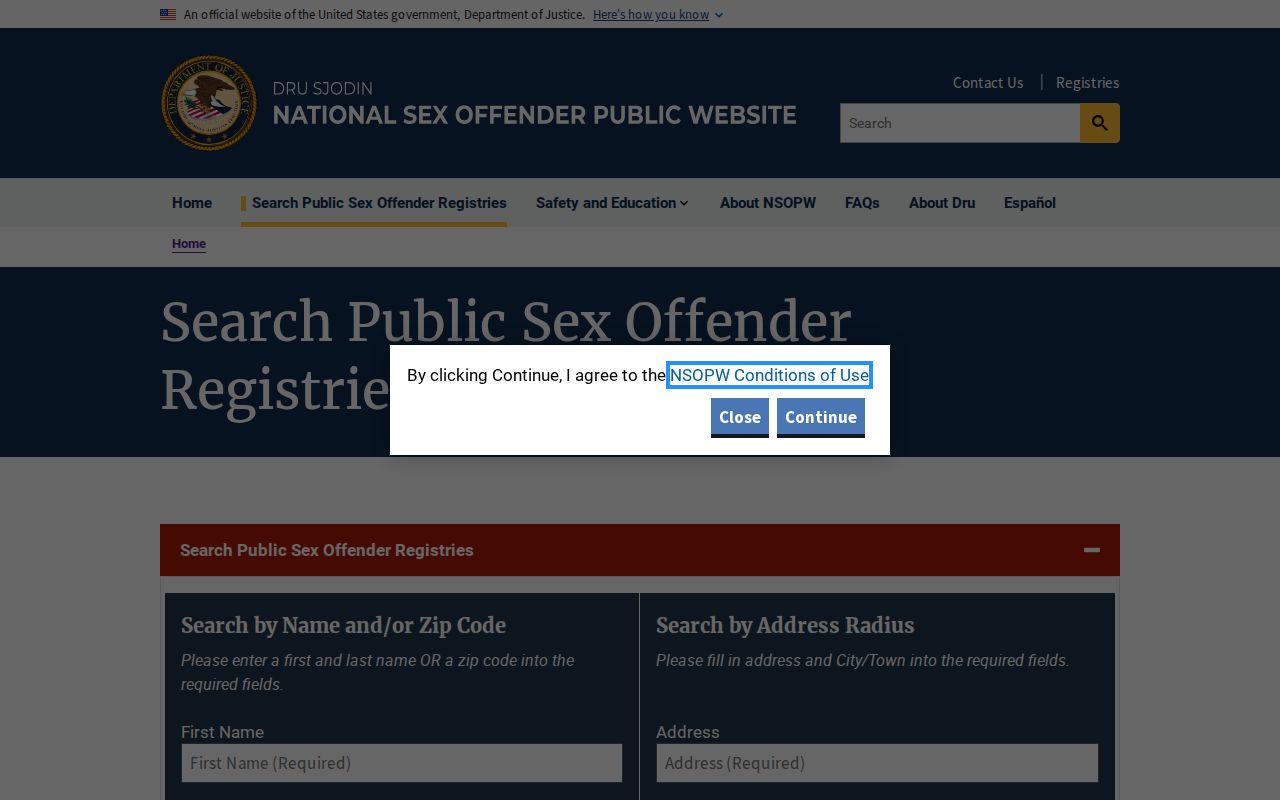
Use a national result to identify the state source, then verify the current Clark County facts with Nevada and local law enforcement.
Clark County Registry Access Limits
The Nevada Public Records Act generally presumes executive and local government records open unless another law makes them confidential. Criminal history and sex-offender records have their own release rules. The public registry publishes only the items NRS 179B.250 permits, while the full registration file under NRS 179D.151 contains far more sensitive identity and tracking data.
The Nevada Public Records Act text shows the general access framework.
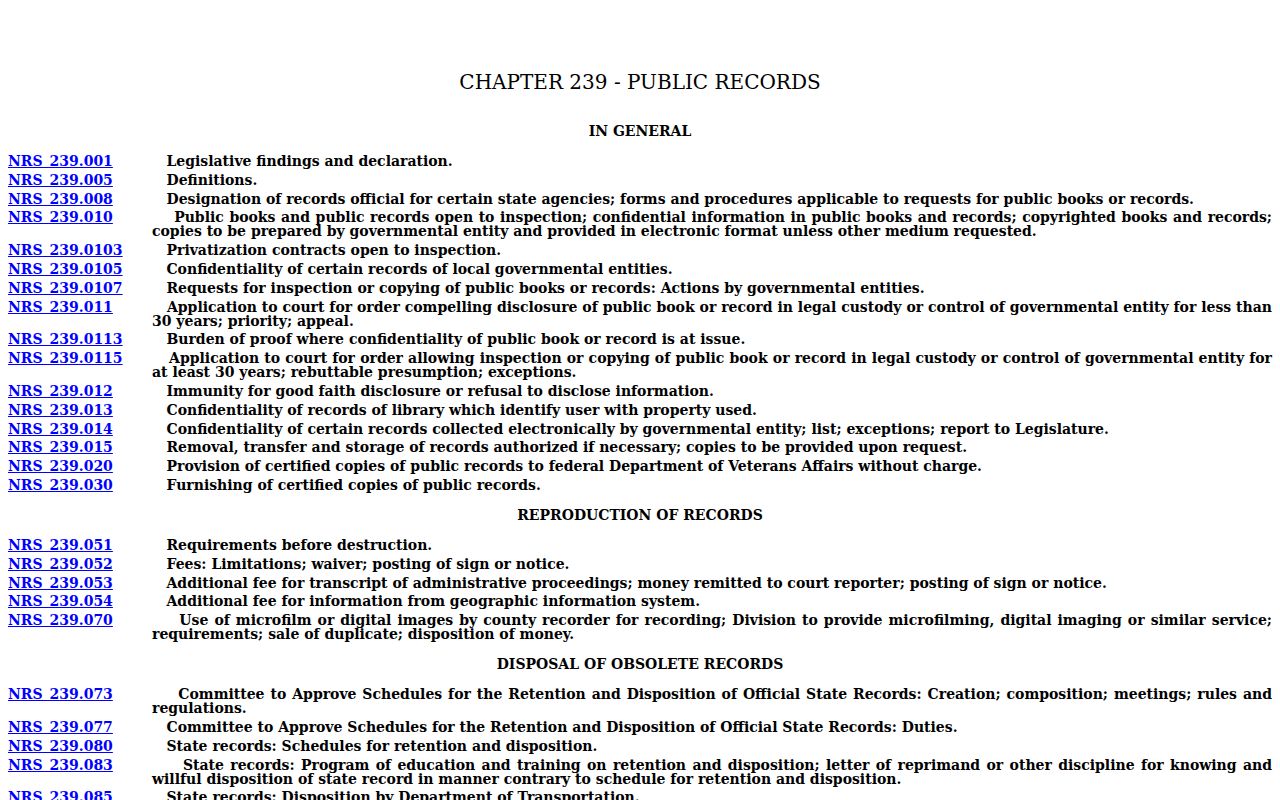
This boundary explains why a public Clark County profile is useful yet cannot serve as the agency's complete registration file.
Sealing Clark County Registry Records
Nevada generally uses record sealing rather than expungement. A sealing order restricts covered criminal records but does not destroy them. Registration duties arise under separate statutes, so a person should not assume that a sealed court record makes every registry duty or public entry vanish. The live law and the specific order control.
The Nevada record-sealing statutes provide the official framework.
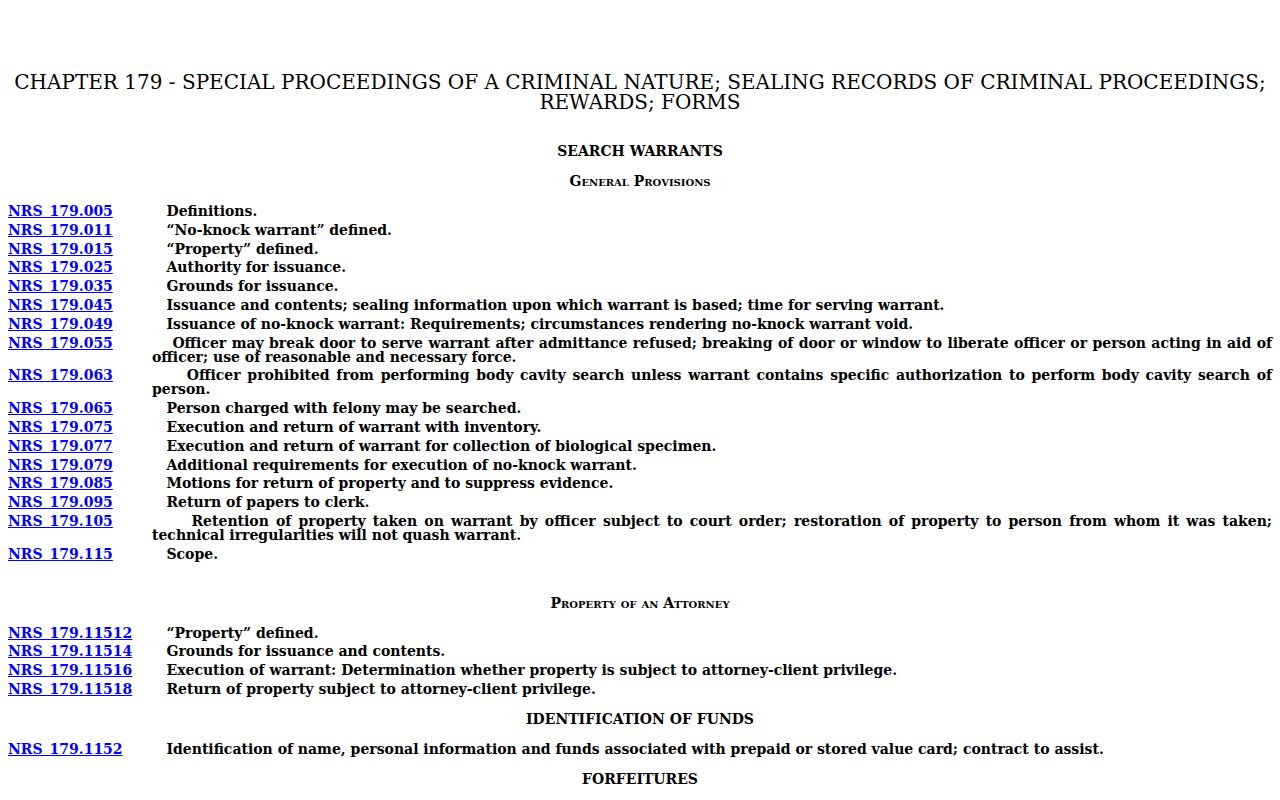
A Clark County resident should compare the signed order with the registry statute and ask the issuing court or registry unit about any unresolved listing.
Using Registry Information Lawfully
Registry data supports community awareness and personal safety planning. It does not establish that DPS considers a listed person currently dangerous, and it does not prove identity without fingerprints. Check the current profile, respect the limits stated on the search screen, and ask the registering agency to verify urgent discrepancies.
Use the registry lawfully: Nevada's NRS 179B.270 through 179B.290 prohibits using registry information to injure, harass, or commit a crime and provides civil and criminal consequences.
Community Notifications can provide a less intrusive way to stay aware of reported changes near a selected place. Suspected noncompliance belongs with local law enforcement. An emergency belongs with 911. Never use a profile as a reason for vigilantism or confrontation.